National Multidisciplinary Laboratory for Climate Change

2022-2026
Website: https://klimavaltozas.org/en
A multidisciplinary, consortial project led by University of Pannonia, PI at our institute: Zsófia Horváth
Funding: National Research, Development and Innovation Office
We participate by seeking a mechanistic understanding of multi-trophic plankton communities to climate-change-related stressors via short- and long-term mesocosm experiments and numerical modelling.
Ponds and pools as models systems in ecology and evolution
2022-2024
PI: Csaba Vad, international partner: Luc De Meester (IGB)
Funding: National Research, Development and Innovation Office (Project no. 2019-2.1.11-TÉT-2020-00159)
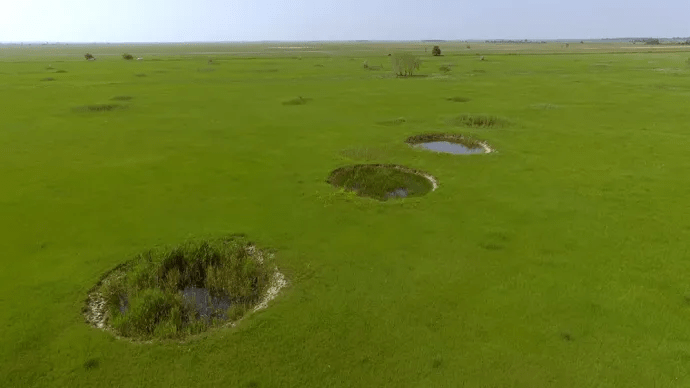
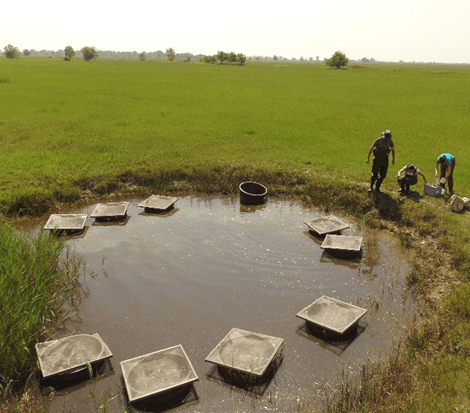
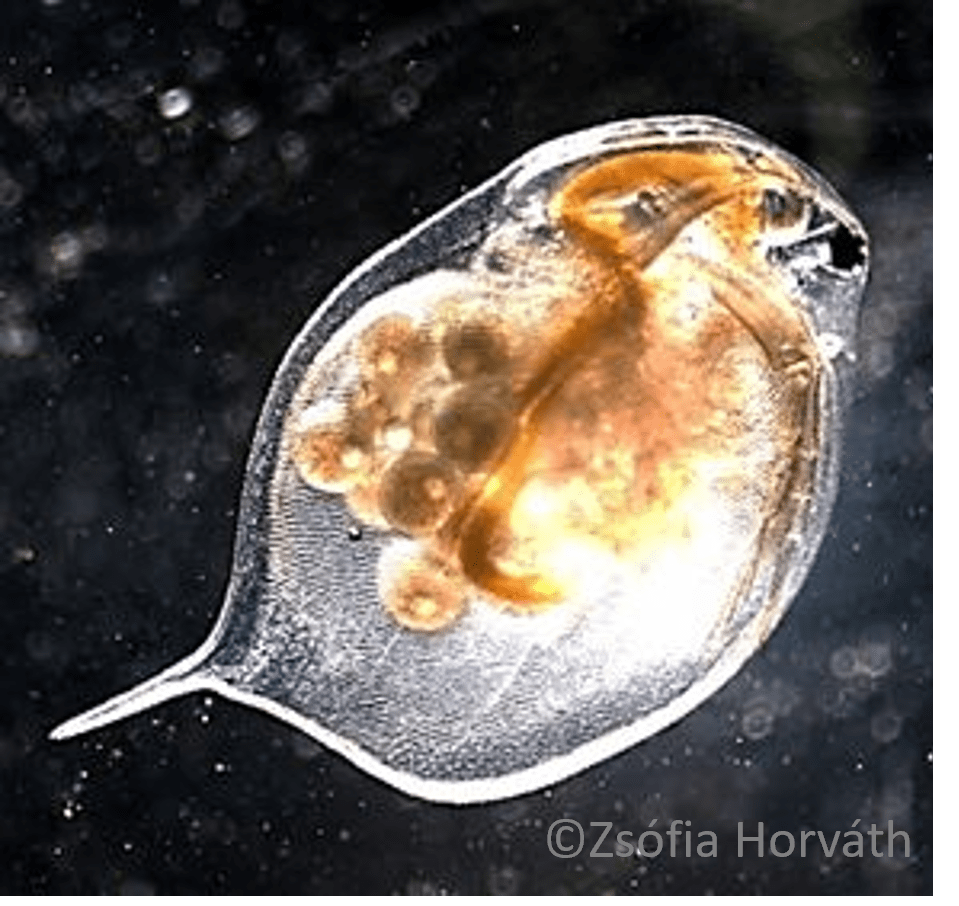
In this project we aim to reveal the importance of eco-evolutionary dynamics in natural ecosystems. Specifically, whether genetic adaptation of the cladoceran Daphnia magna to a natural salinity gradient influences population dynamics, top-down control of algae, and community composition, using one of our favourite model system, the bomb crater pond network at Apaj.
Effects of climate-change driven diet shift on community composition and ecosystem functioning in an invasive crustacean (ClimateShift)
2021-2026
PI: Csaba Vad
Funding: National Research, Development and Innovation Office (Project no. FK 138215)
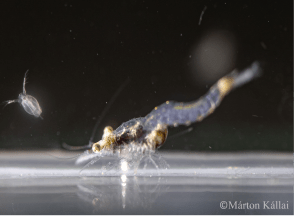
The project’s primary goal is to better understand the effects of changing diet preference in omnivores due to global warming. By using the widespread invasive mysid Limnomysis benedeni, we study the temperature dependence of its food preference and its effects on the structure and functioning of plankton communities.
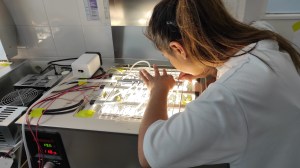
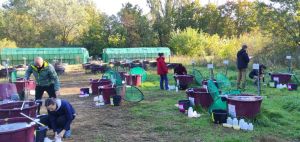
AQUACOSM-plus: Network of Leading Ecosystem Scale Experimental AQUAtic MesoCOSM Facilities Connecting Rivers, Lakes, Estuaries and Oceans in Europe and beyond
2020-2024
Website: https://www.aquacosm.eu/
PI: Jens C. Nejstgaard (IGB), PI at our institute: Csaba Vad
Funding: EU Horizon 2020
The project aims to integrate European mesocosm infrastructures into an interdisciplinary, collaborative network covering all ecoregions of Europe to advance understanding and mitigation of the impacts of stressors on aquatic ecosystems.
 Vad Lab